AI literacy and everyday productivity
Understand what generative AI does, why it can produce convincing errors and how to choose suitable tasks. Practise drafting, summarising and organising information while retaining responsibility for the result.
Practical AI skills. Clear workflows. Work your team can review and reuse.
Abhishek Adhikari is an AI trainer, prompt engineering practitioner and open-source contributor based in Hetauda, Nepal. His training focuses on helping people understand AI tools, write clearer instructions and apply AI to everyday professional tasks.
Listed among Agentic Awesome Skills’ Top Contributors: #1 for commits and #2 for skills added in its README, checked 5 October 2026. View the contributor listing.
Looking for corporate AI training in Nepal? Start with the work your team already does: preparing reports, researching information, writing customer messages, planning content or documenting repeatable processes. Build a training session around those needs and the level of support your participants require.
For businesses, marketing teams, educational institutions and community organisations. Discuss your location, preferred delivery format and available dates when enquiring.
AI training is practical education in using artificial intelligence tools effectively and checking their output. A useful workshop connects explanations to guided exercises, giving participants a way to judge when AI helps, where it can make mistakes and when a person must make the final decision.
Training topics can include ChatGPT, Claude and Gemini, prompt engineering, research support, business writing, content planning and introductory AI workflows. The tools and exercises should match your organisation’s approved accounts, policies and learning goals.
For foundational sessions, participants need basic computer skills rather than a programming background. More technical topics can be scoped separately.
Your marketing team, operations staff and managers do not all need the same workshop. Begin with the tasks that consume time or create inconsistent results, then choose practical exercises that address them.
| Team | Example training exercise | Output to practise reviewing |
|---|---|---|
| Marketing and SEO | Turn an approved product brief into a content plan | Audience-focused outline with factual claims flagged for checking |
| Sales and customer support | Draft responses from an approved service policy | Reply templates with clear escalation points |
| HR and administration | Organise an onboarding process | Checklist with responsibilities, required inputs and approval steps |
| Operations | Convert a process description into a draft procedure | Reusable workflow with exceptions and human review |
| Management | Summarise a nonconfidential report | Decision brief separating evidence, assumptions and unanswered questions |
| Education | Develop an activity from an approved lesson objective | Teaching resource checked for accuracy, level and academic integrity |
These examples illustrate possible workshop exercises. The final agenda is agreed around your team and the information it can safely use.
Understand what generative AI does, why it can produce convincing errors and how to choose suitable tasks. Practise drafting, summarising and organising information while retaining responsibility for the result.
Learn to specify the task, relevant context, source material, constraints and required output. Improve a prompt by examining its results and refining unclear instructions. Build useful templates for work that recurs.
Use AI to explore search intent, organise topic research, prepare briefs and review content structure. Keep product information, examples and claims grounded in your own knowledge and reliable sources. Discuss how helpful content and technical accessibility support discovery in search and AI-assisted answers.
Practise extracting information from approved material, comparing sources and producing an initial summary. Learn to distinguish a source-supported statement from an inference, then check references before sharing the output.
Explore how a repeatable task can be documented as a workflow with defined inputs, steps, outputs and review points. For suitable groups, discuss how reusable agent instructions differ from a single prompt, and how permissions and validation affect their use.
Work with public, synthetic or approved information. Discuss confidentiality, personal data, tool permissions, misleading output and human approval. Agree which work can be assisted by AI and which decisions need a qualified person.
AI awareness session: An introduction for a team beginning to explore AI, with demonstrations and discussion around relevant work.
Practical team workshop: Guided exercises around a small number of priority tasks, with time to inspect and improve the outputs.
Department-focused training: A programme built around a defined function, such as marketing, administration or operations.
Multi-session learning: A sequence that allows participants to practise between sessions and bring back examples for review.
Ask about online or in-person delivery. Duration, group size, materials, support and any paid-tool requirements are confirmed in the proposal.
Share two or three tasks your team wants to improve and we can discuss the exercises, format and dates that fit.
Consider an employee onboarding checklist. A simple request to “write an onboarding plan” can produce a polished but generic answer. A stronger exercise begins with the approved process, responsible people, required documents and completion criteria.
Participants can practise turning that information into a draft checklist, then inspect the result for missing steps, unsupported assumptions and actions requiring approval. The same approach can apply to content briefs, meeting summaries and customer-support drafts.
The goal is to make the work understandable and reviewable, so the team knows how to use the output and when to challenge it.
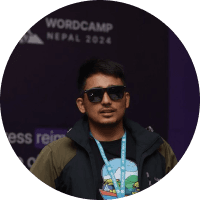
AI Trainer · Prompt Engineering Practitioner · Open-Source Contributor
Abhishek’s work connects AI practice, entrepreneurship, community learning and open-source contribution. His official WordCamp Kathmandu 2026 speaker biography describes his work in prompt engineering, AI workflows and community-led technology initiatives.
His public GitHub profile and contributions provide another way to assess his work. Release notes for Agentic Awesome Skills acknowledge his contributions to SME operations skill batches and improvements to repository documentation and catalogue links.
The Agentic Awesome Skills README lists @WHOISABHISHEKADHIKARI first in its “Most Commits” table, with 36 commits, and second in its “Most Skills Added” table, with 125 skills. These are the figures displayed by the project’s README when checked on 5 October 2026. They describe contribution to this specific open-source project.
See the Top Contributors sectionFor a training buyer, those records offer something practical to inspect: examples of how work can be described, structured and improved in public.
On 7 August 2026, Abhishek facilitated a two-hour online AI prompt-engineering session for 75+ HR professionals in collaboration with Human Capital Development Professionals Nepal. Under the theme “Prompt Smarter, Not Harder,” the session covered practical prompting for HR workflows, communication, productivity and organisational development.
This professional-audience session is particularly relevant for organisations exploring AI training for HR and administration teams.
Abhishek presented “Prompt Smarter, Not Harder: Curing Pain Points with skill.md,” exploring how structured instructions can help AI tools work with context and repeatable processes. The session connected prompt engineering and reusable AI skills to practical coding and productivity tasks.
At Dreams College in Bharatpur, Abhishek delivered “Open to Open Source: Build Your Career with AI Workflows” in collaboration with Code for Change. The session introduced AI workflows, agentic AI, large language models and practical ways to begin contributing to open-source projects.
As an Open Source & AI Mentor with Graphilla Technology, Abhishek delivered a two-hour session on AI-assisted open-source contribution. Topics included contribution workflows, collaboration and using practical projects to develop technical skills.
His earlier teaching and mentoring work includes Figma and UI/UX programmes with Code for Change, Sharing Mentorship and DEV Community Nepal, alongside introductory Arduino and robotics instruction at Navodaya Shishu Sadan. This background adds experience explaining technical concepts through guided practice.
Abhishek’s Luma profile provides a public record of event activity. As checked on 5 October 2026, it displays four hosted events. The following event listings identify him as a host or co-host:
| Event | Advertised date and location | Listed role | Programme focus |
|---|---|---|---|
| Secure Developer Conference 2026 | 31 August–1 September 2026, Hetauda | Host | Development, open source, AI, cloud and cybersecurity |
| Building Applications with IBM Bob | 1 September 2026, Dragon Banquet, Hetauda | Co-host with Upendra Prasad Neupane | Hands-on AI-assisted application development |
Abhishek also served as lead organiser of Secure Developer Conference 2026 and delivered an “Open to Open Source” session on beginning contributions and collaborating with open-source communities.
Abhishek is the creator of 100SEOTools. Visitors to the platform already work on content, websites and search visibility. Practical AI training extends that work by helping teams improve how they research, brief, draft and review their material.
The connection is straightforward: useful tools support individual tasks, while training helps people choose the right task, explain their requirements and assess the result.
Tell us about your organisation, the participants and the work you want to improve. Include two or three examples of relevant tasks without sharing confidential documents or personal information.
The discussion can then establish the proposed agenda, delivery format, participant requirements, expected exercises and fee. Any follow-up support or additional deliverables should be stated in the proposal so your team knows what is included.
Suggested enquiry details: your name, organisation, work email, approximate participant count, training goals, preferred dates and online or in-person preference. Phone number is optional.
Tell us about your team and goals. Required fields are marked with an asterisk (*).
Prefer to contact Abhishek directly? All enquiries can also be handled through the contact page on abhishekadhikari.com.
Abhishek Adhikari is an AI trainer, prompt engineering practitioner and open-source contributor based in Hetauda, Nepal. His public work includes an official WordCamp Kathmandu 2026 speaker profile and contributions acknowledged by Agentic Awesome Skills.
It can cover AI fundamentals, prompting, business writing, research, content planning and practical workflows. The agenda should be based on participants' roles and include output verification and responsible use.
Foundational AI literacy and everyday productivity sessions can be designed for people without programming experience. Technical automation or agent development needs a separate discussion of prerequisites.
Discuss relevant examples during scoping. Use public, synthetic, anonymised or explicitly approved information, and confirm the tools and permissions before preparing exercises.
Share your location and preferred delivery format when enquiring. Availability, travel arrangements and online delivery should be confirmed for the requested dates.
There is no single fee for every programme. A proposal depends on group size, duration, preparation, delivery mode, travel and support. Request a quote for the actual scope your organisation needs.
Look for clear learning goals, relevant examples, public evidence of work and an agenda suited to your participants. Ask how the trainer handles mistakes, confidentiality and practical assessment. Compare what each proposal includes.
No. Outcomes depend on the task, source material, tools, participants and review process. Training can help your team develop more effective working habits; it cannot guarantee business performance, Google rankings or inclusion in AI answers.
Start with one question: which recurring task would your team benefit from doing more clearly and consistently?
Share that task, your audience and your preferred dates to discuss practical AI training with Abhishek Adhikari.
Prefer to write directly? All enquiries can also be handled through abhishekadhikari.com/contact.